

Listen to the article
Listen to the session
Listen to the article
Bread is good. We break bread with family and friends. The Israelites lived on daily manna in the wilderness for years. Jesus broke the bread and gave thanks before feeding the 5,000. We are even taught to ask for our own daily bread.
But the bread Isaiah describes is different. It is the bread of adversity, accompanied by the water of affliction. Who would pray for that? Who would give thanks for that?
Albert Einstein is often credited with the phrase, “Adversity introduces a man to himself.” And it’s true. It’s not the brutal trials of Job or the excruciating testing of Abraham, but more often the quiet, persistent hardships—our daily bread—that shape us. There is nothing heroic about it. It’s not a martyrdom we choose, but unwanted circumstances that define our lives.
The author Flannery O’Connor contracted lupus early in life and died at 39. In her journal, she wrote of her desire to be a great writer—not for herself, but as a testament to God. After her death, a reviewer asked, “Without this terrible narrowing down, would she have achieved the greatness she prayed for?”
That terrible narrowing down often introduces us to ourselves, doesn’t it?
In his book A Promise Kept, Robertson McQuilken describes his own narrowing down when his wife, Muriel, was diagnosed with Alzheimer’s. Friends and colleagues encouraged him to place her in an institution when she could no longer function. Instead, he resigned as president of a Christian college and seminary to care for her himself. She lived another 25 years. “When the time came,” he wrote, “the decision was firm. It was no great calculation, nor was it terribly difficult. Had I not promised, 42 years before, ‘in sickness and in health… till death do us part’?”
In August 2013, Curtis Meadows felt a tingling in his arms that turned quickly to numbness. Within 20 minutes, he was paralyzed from the neck down. Diagnosed with transverse myelitis, an inflammation across the spinal cord that blocks nerve impulses, Curtis has since been confined to a bed and wheelchair. On my first visit, I wanted to know how his life—and his family’s—had changed. But Curtis turned the conversation to the people helping him.
He knew their struggles. The nurses, aides, and therapists who surrounded him each day were barely getting by. He told us about their families, about what it meant to live on the edge—how one missed paycheck or illness could unravel everything. And yet, he spoke just as much about their courage, perseverance, and refusal to live in bitterness or anger.
Alexander Solzhenitsyn spent eight years in a Soviet labor camp and later wrote, “Bless you, prison, for having been in my life. It was only when I lay there on the rotting prison straw that I sensed within myself the first stirring of good.” Nelson Mandela’s commitment to forgiveness was forged over 27 years on Robben Island. “As I walked out the door toward the gate that would lead to my freedom,” he said, “I knew if I didn’t leave my bitterness and hatred behind, I’d still be imprisoned.”
All of them experienced the terrible narrowing down of life. And all of them, like Viktor Frankl, used the bread of adversity to discover what could not be found without it. Frankl wrote, “Everything can be taken from a man but one thing: the last of the human freedoms—to choose one’s attitude in any given set of circumstances. Life is never made unbearable by circumstances, but only by lack of meaning and purpose.”
For some, it means spending their most productive years caring for another. For others, it is prison, illness, or circumstances they would never have chosen—years carved out of their lives that others might call wasted.
Still others find their calling in what we would call an ordinary life. Oswald Chambers wrote:
“We do not need the grace of God to withstand crises—human nature and pride are sufficient for us to face the stress and strain magnificently. But it does require the supernatural grace of God to live twenty-four hours of every day as a saint, going through drudgery, and living an ordinary, unnoticed, and ignored existence as a disciple of Jesus. It is ingrained in us that we have to do exceptional things for God—but we do not. We have to be exceptional in the ordinary things of life, and holy on the ordinary streets, among ordinary people.”
All of us, at some point in life, will taste the bread of adversity and drink the water of affliction. How we respond—like Robertson McQuilken—becomes our own firm decision to make.
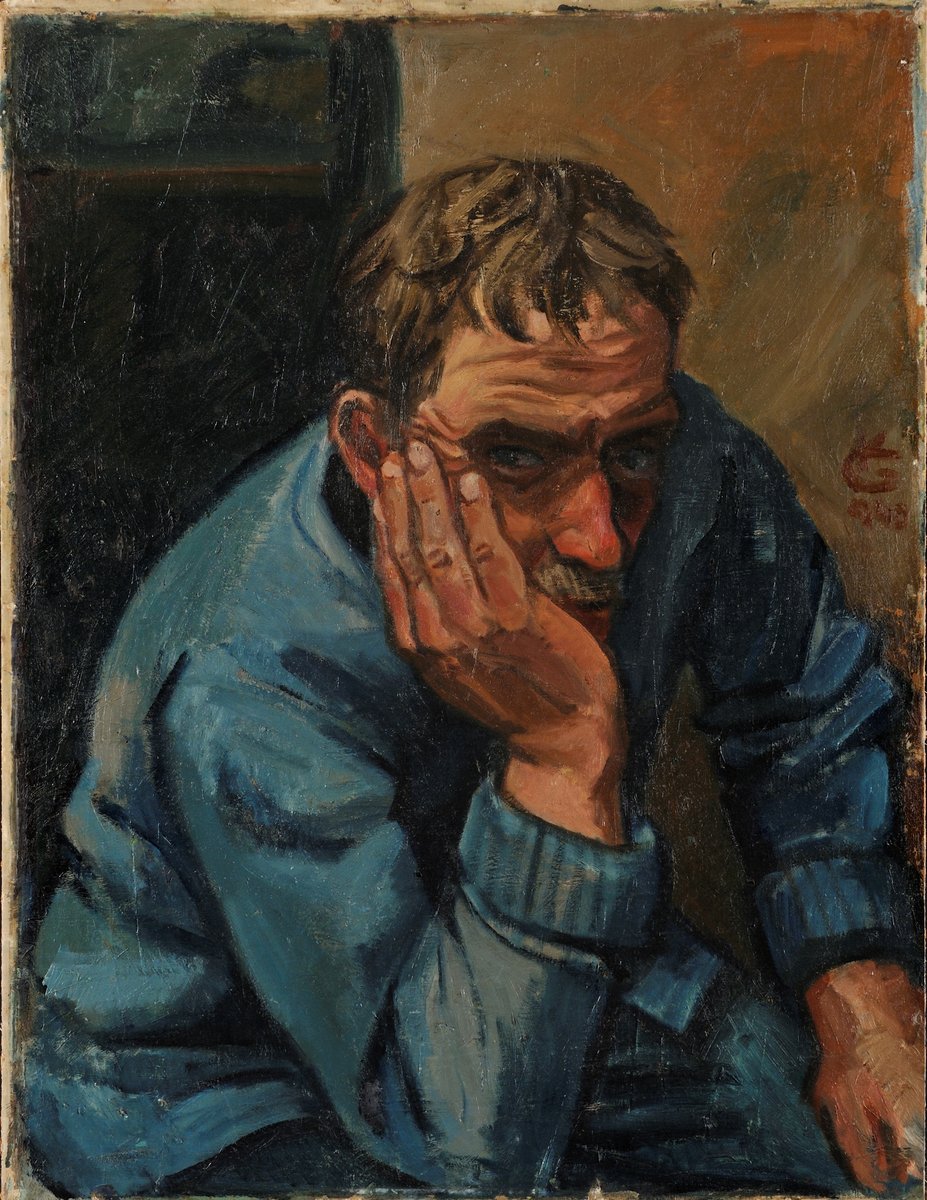
Art by György Kondor
Get The Round Table in your Inbox
Every now and again we send out a collection of our writings, links to our webcasts, and reminders about events. Subscribe to stay in touch.
