

Listen to the article
Listen to the session
Listen to the article
When the plot of a show needs to fill in the background of the story, the line “years earlier” pops up at the bottom of the screen. That tells us something in the past helps explain the present. Were we to do that here, the line would read “150 years earlier,” because Israel’s present predicament began long ago when the single Kingdom of Israel split into two parts: Israel in the north and Judah in the south.
The turning point was what the writers of Scripture call “the sin of the house of Jeroboam,” the first king of the north.
Based on his astute reading of human nature, Jeroboam devised a brilliant strategy to establish and protect his political interests. He did not outlaw religion. He simply created a rival for he recognized the power of easy religion to shape people. He made them consumers of convenience and choice. He kept religion, but with a few adjustments that seemed reasonable to everyone.
Why make the long, expensive, and dangerous journey to the Temple in Jerusalem when you could worship closer to home with people you know?
Why support an institution that tells you what to do when you can have a religion more compatible with what you want—and deserve?
And here is the brilliance of it: they believed him. He sold them the idea that they could hold two opposite standards in their minds without consequences. They trusted him and said to themselves:
We can disobey God and still live blessed lives.
We can serve idols without any unpleasant aftertaste.
Mark Twain was right when he quipped, ”It's easier to fool people than to convince them that they have been fooled.”
Over time, their choices became not only sinful but corrosive, eventually leading to the destruction of Jeroboam’s entire household. What began as a convenience became a horror: “They bowed down to all the starry hosts, and they worshiped Baal. They sacrificed their sons and daughters in the fire. They practiced divination and sought omens and sold themselves to do evil in the eyes of the Lord, arousing him to anger.”
No following ruler could undo what Jeroboam had set in motion. His sin became a permanent feature of Israel’s identity. For 150 years, not a single king of Israel was righteous. Jeroboam’s sin was woven so tightly into their character that no change in leadership could remove it without unraveling the whole.
By the time of Hosea, the words of the prophets had fallen on deaf ears for generations. As C.S. Lewis writes of those who choose Hell: “A damned soul is nearly nothing: it is shrunk, shut up in itself. Good beats upon the damned incessantly as sound waves beat on the ears of the deaf, but they cannot receive it. Their fists are clenched, their teeth are clenched, their eyes fast shut. First they will not, in the end they cannot, open their hands for gifts, or their mouth for food, or their eyes to see.”
God sometimes goes to extremes to awaken damned souls. What else could he do to make Israel realize the destruction awaiting them?
We know the passage in John that reads, “The Word became flesh and dwelled among us.” In a sense, that was God’s last resort here. He had sent prophets to warn and rebuke, but the people had become immune to words. Words needed to become flesh—living illustrations—to break through their blindness. Only something vivid and astonishing would do. Something so shocking and stark they would be forced to see their situation for what it was and who they had become.
So God commanded Hosea: “Go, marry a prostitute and have children with her, for like an adulterous wife this land is guilty of unfaithfulness to the Lord.” Hosea obeyed, marrying Gomer, daughter of Diblaim, who bore him a son.” But, like Israel, she was shamelessly unfaithful time and again.
The writer Flannery O’Connor once explained, “I use the grotesque the way I do because people are deaf and dumb and need help to see and hear. When you can assume that your audience holds the same beliefs you do, you can relax and use more normal means of talking to it; when you have to assume that it does not, then you have to make your vision apparent by shock—to the hard of hearing you shout, and for the almost-blind you draw large and startling figures.”
Sadly, the damage of 150 years of unfaithfulness to God’s love was irreversible. Nothing, not even the scandal of Hosea’s marriage to a prostitute, could shock them into repentance. No one saw the obvious or the need to confess. The sin of the house of Jeroboam could not be undone, and within thirty years, Israel was carried into exile and extinction. The house of Jeroboam and the kingdom of the north disappeared forever.
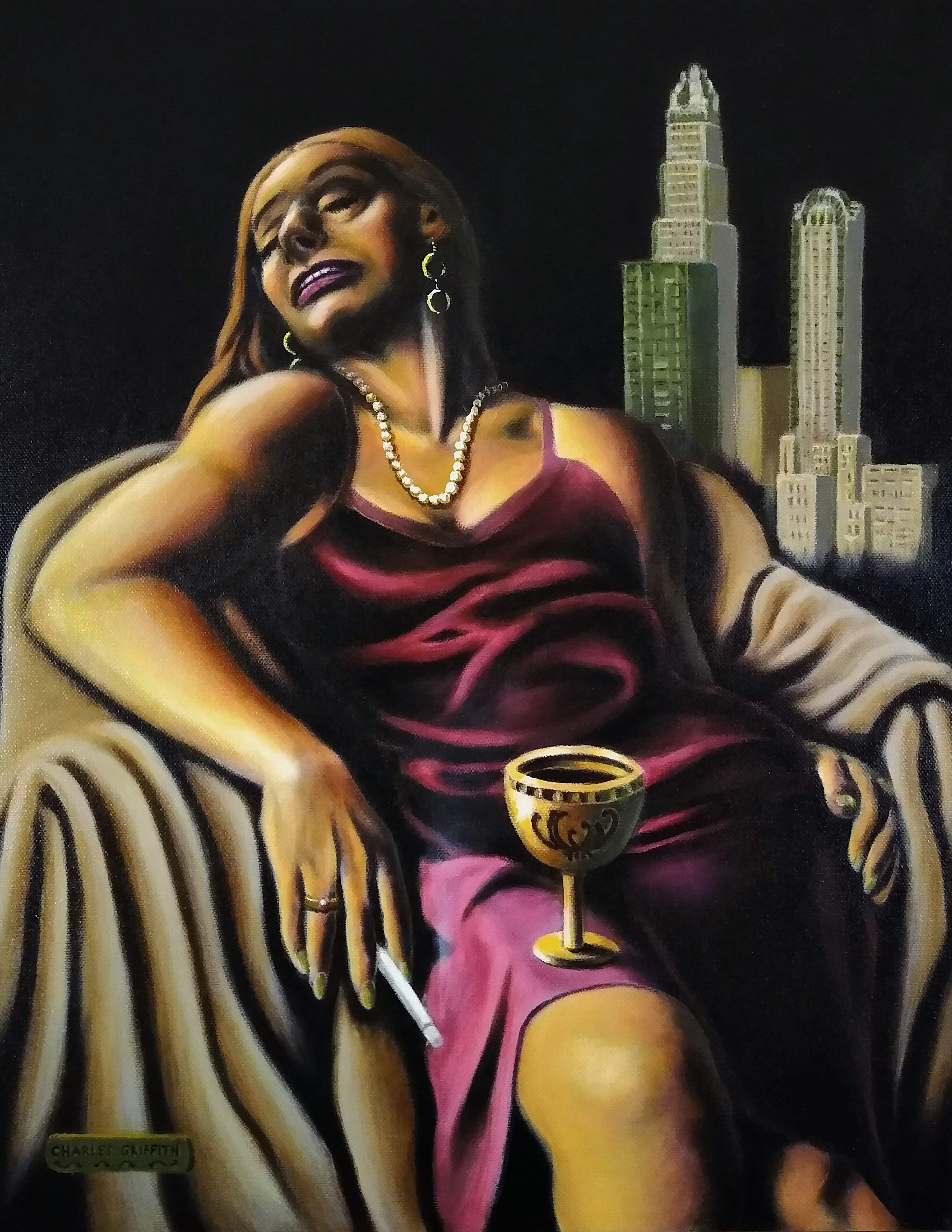
Art by Charles Griffith
Get The Round Table in your Inbox
Every now and again we send out a collection of our writings, links to our webcasts, and reminders about events. Subscribe to stay in touch.
