

Listen to the article
Listen to the session
Listen to the article
I like to think of Ecclesiastes as Solomon's private journal published only after his death. This is not a book written by a cynical and angry young man. Neither are these his father’s psalms or snippets of practical wisdom compiled in Proverbs. This is the concluding reflection of a man the world is not likely to see again. Had people known what he was thinking they might have been disappointed, confused or concerned about his health. These are his private thoughts. These are the reflections of a man looking for meaning later in life and not a young man sorting out his future. It's the diary of an older Solomon, the son of David, the wisest, wealthiest and most powerful man of his time.
Ecclesiastes is the book we should have been assigned when young - but we would not have had the life experience to understand it. We know it now. We're living it. Like reading Shakespeare, only later in life can we understand the depth of the ambition of MacBeth, the jealousy of Othello, the indulgence of Falstaff and the melancholy of Hamlet.
A Bible without Ecclesiastes, like Job, would be incomplete. It would have been easier to take out Job and Ecclesiastes and even some of the Psalms but without them we would be left with only part of our lives addressed. It's a good thing we have Solomon's journal for those days we have the same questions and moods of melancholy, regret and doubts.
Truthfully, the Boomers are probably just now ready for King Lear and Ecclesiastes and I'm afraid we'll be distracted by reading Mature Health, exploring travel for seniors and poring over investments for aging. I am afraid we'll shy away from growing older and miss the richness of age in our flight from aging itself. Age has particular responsibilities and opportunities. We have a duty to be wise - not to be “forever young” as we are constantly encouraged. Age has a set of tasks that cannot be fulfilled when we are young. Age is when we distill the experiences and lessons of a lifetime and pass them on to the next generation who may or may not hear what we say. This is not the time to become bombastic preachers but reflective compilers while writing down in our bedside journals what life has taught us.
How different the Solomon of Ecclesiastes is from the young king he was years before.
"That night God appeared to Solomon and said to him, “Ask for whatever you want me to give you.” Solomon answered God, “You have shown great kindness to David my father and have made me king in his place. Now, Lord God, let your promise to my father David be confirmed, for you have made me king over a people who are as numerous as the dust of the earth. Give me wisdom and knowledge, that I may lead this people, for who is able to govern this great people of yours?” God said to Solomon, “Since this is your heart’s desire and you have not asked for wealth, possessions or honor, nor for the death of your enemies, and since you have not asked for a long life but for wisdom and knowledge to govern my people over whom I have made you king, therefore wisdom and knowledge will be given you. And I will also give you wealth, possessions and honor, such as no king who was before you ever had and none after you will have.”
His prayer was for the wisdom to lead - not for long life or wealth, possessions and honor. Somewhere along the line Solomon misused his gift and discovered too late that wisdom and knowledge detached from responsibility ends in sorrow and grief.
No blessing detached from its purpose can produce the joy intended. Great wealth, talent, intelligence, influence or leadership without responsibility is corrupted. There is nothing in this world "under the sun" that detached from responsibility can satisfy the hunger for meaning. Everything created - pleasure, work, love, beauty, wealth, reputation - leads to emptiness when pursued for itself. It is the mechanical rabbit we chase.
Viktor Frankl was right when he wrote in “Man’s Search for Meaning” about his life in the Nazi death camp:
It did not really matter what we
expected from life, but rather what
life expected from us. We needed
to stop asking about the meaning
of life, and instead to think of
ourselves as those who were being
questioned by life—daily and
hourly. ..Ultimately, man should not
ask what the meaning of
his life is, but rather must
recognize that it is he who is
asked. In a word, each
man is questioned by life...Life
ultimately means taking the
responsibility to find the right
answer to its problems and to fulfill
the tasks which it constantly sets
for each individual.
Solomon lost his way when he forgot why he desired wisdom and began his futile and self-focused search for meaning. Wisdom has purpose and a proper use. Do not -
whether young or old - pray for wisdom detached from responsibility.
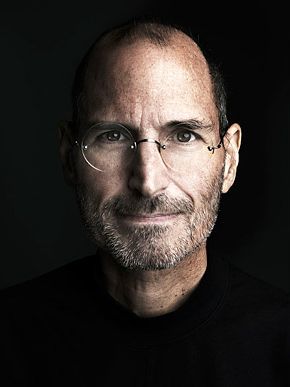
Photo of Steve Jobs by Marco
Grob
Get The Round Table in your Inbox
Every now and again we send out a collection of our writings, links to our webcasts, and reminders about events. Subscribe to stay in touch.
